
01
The sounds erode
Vowels devoice, syllables drop, and the tidy blocks you see on the page arrive at your ear as one unbroken line.
Dictation practice on unscripted audio. Hear a line, type what reached your ear, then see exactly where the sound and the script parted ways.
No card required · Learn in English, practise in Japanese
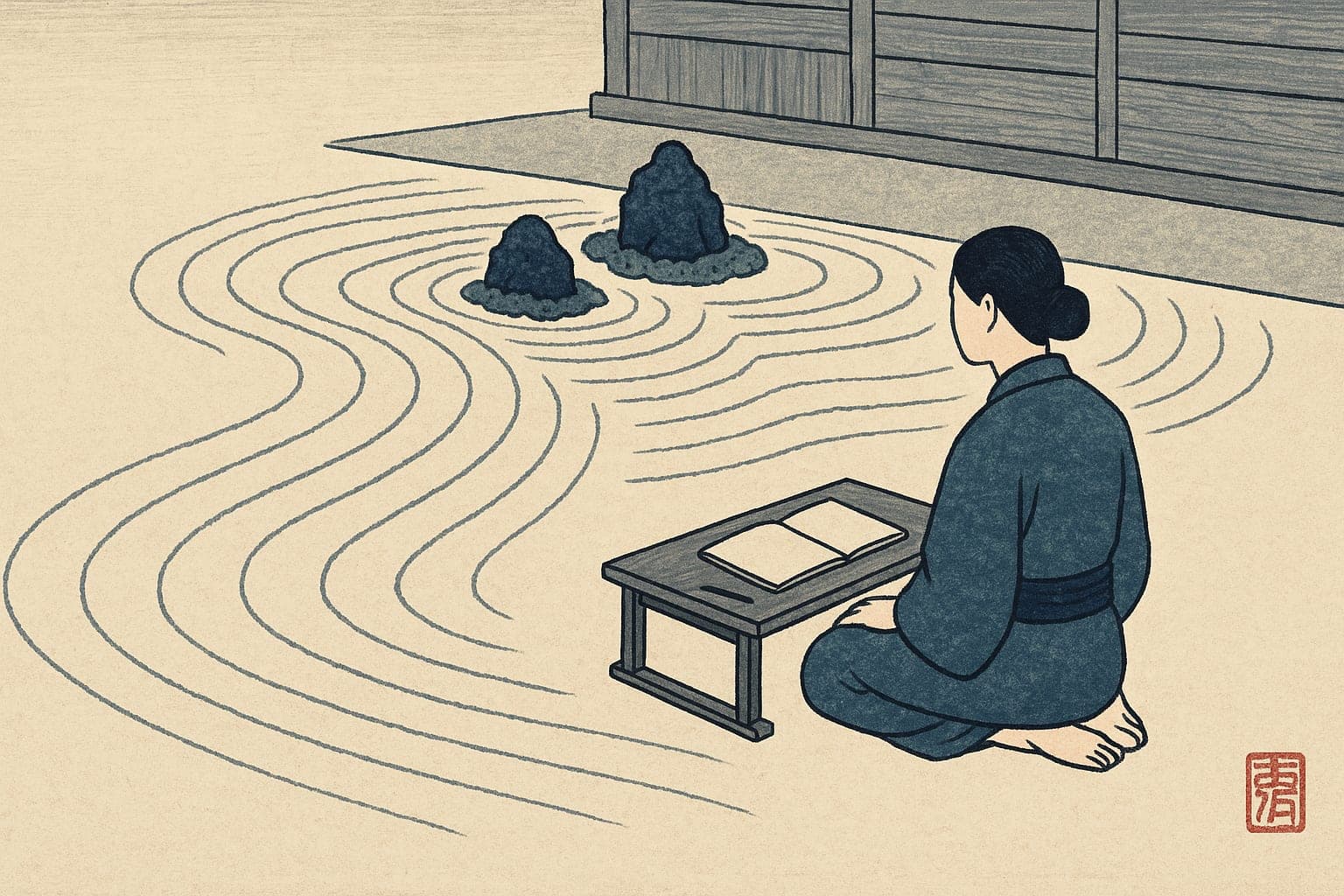
Field note
してる
What the textbook writes as している. Same words. One syllable shorter, and gone before you finish reading it.
Across WELE, all languages · this month
2,234+
listening hours
43,268+
listening sessions
1,215+
active learners
5,079+
submissions
The listening gap
It is rarely a vocabulary problem. Your ear has not yet learned what happens to written Japanese on its way into real speech.
01
Vowels devoice, syllables drop, and the tidy blocks you see on the page arrive at your ear as one unbroken line.
02
Two words can share every letter and differ only in melody — a distinction the eye has never once had to notice.
03
Real conversation contracts, trails off, and leans on small particles that no vocabulary list prepared you for.
Inside a lesson
WELE keeps the interface quiet so your attention stays on the sound. Work line by line, then set your transcription beside the original.
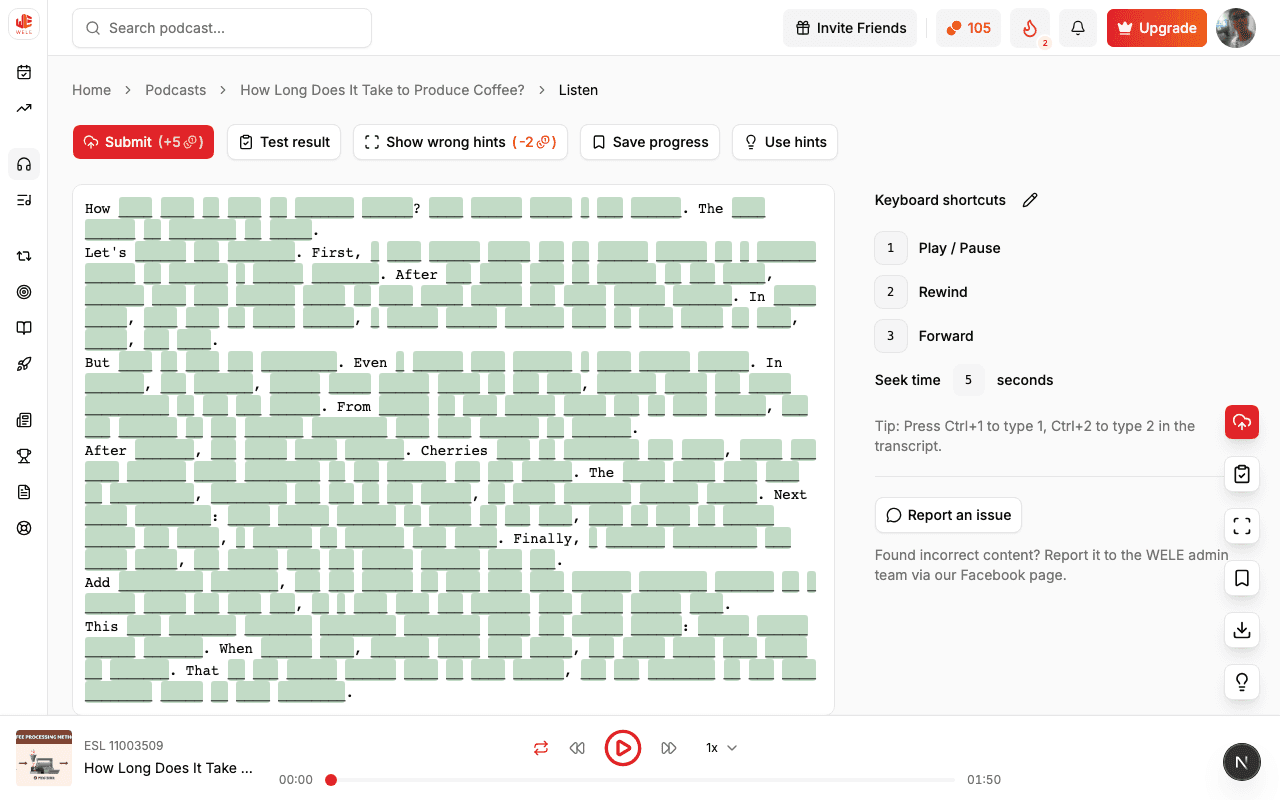
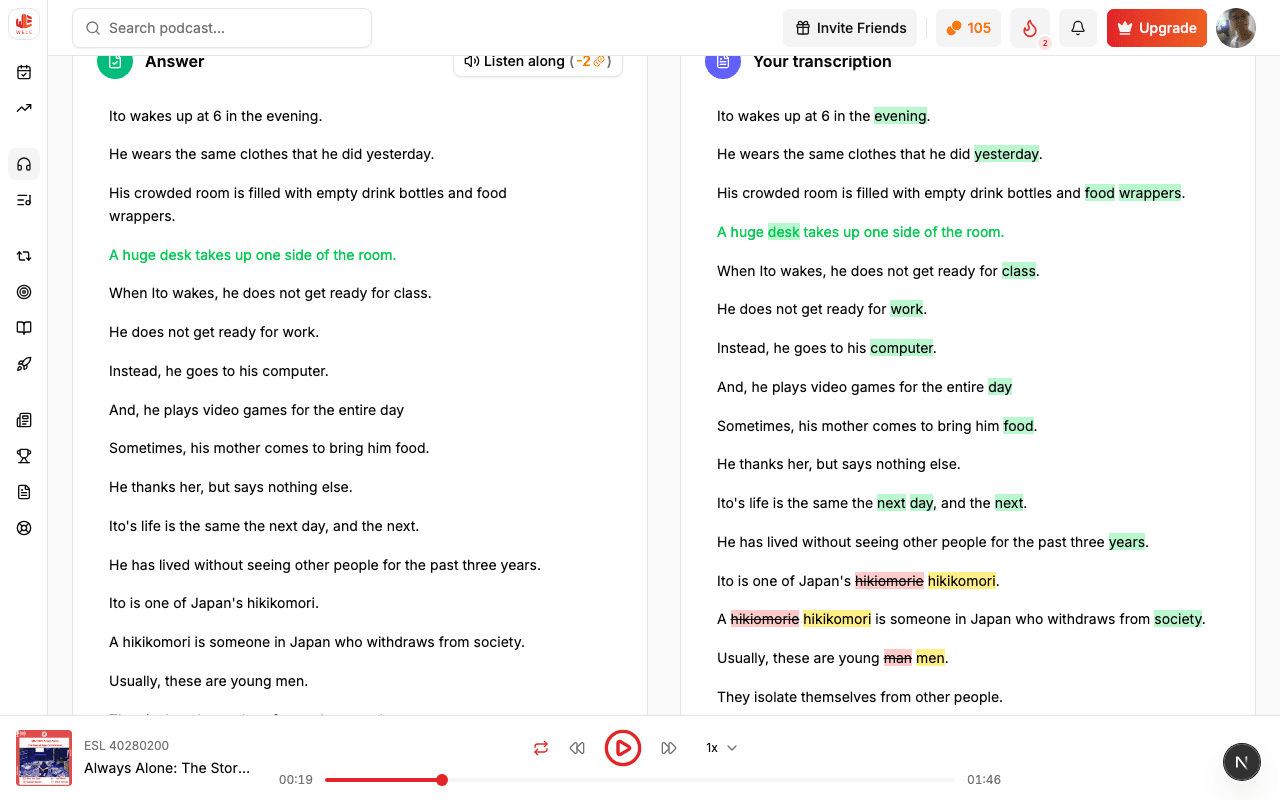
The WELE method
Dictation turns passive listening into deliberate practice. You commit to a guess, receive precise feedback, and hear the same audio again with new information.
Take in the whole thought before chasing any single word.
Transcribe the line exactly as your ear received it, mistakes included.
Reveal the transcript and study every difference that carries meaning.
Bring the difficult words back later, timed to the shape of your memory.
Anatomy of sound
A transcript lets you stop the moment and look at it. You can see where a vowel vanished, where the melody moved, where three syllables became two — then replay that exact phrase until it stops surprising you.
Field notes
01
です
02
箸 / 橋
03
している
Three of hundreds. Every one of them is invisible on the page and unavoidable in conversation.
The listening shelf
Build the habit around subjects you already care about, then move from clear, measured speech toward audio that makes no allowance for you at all.
Standard Tokyo pitch at an unhurried pace. The cleanest place to begin.
Overlapping turns, back-channelling, and all the fillers a textbook tidies away.
Unscripted but deliberately paced, built around vocabulary you already half know.
Casual registers, heavy contraction, and sentence-final particles doing real work.
Regional accents and unrehearsed rhythm, with speech that runs past the sentence.
Measured reading that puts written vocabulary back into a spoken shape.
Built for deliberate practice
No noisy lesson map, no endless reward loop. WELE gives you the tools to practise, notice, and come back.
A language becomes yours on the day a voice stops sounding foreign.
We build listening practice around real voices and useful feedback. The Japanese experience has its own atmosphere — quiet, unhurried, deliberately plain — but the principle is unchanged: practise actively, understand your mistakes, and make progress you can hear.
Simple pricing
The core experience is free. Premium adds depth without turning your practice into a subscription puzzle.
Learner notes
“I could read a paragraph faster than I could catch a single spoken line. Writing down what I actually heard was the first time that gap became something I could look at.”
Priya
Working toward N3 · Manchester
“Nobody had warned me that half the vowels quietly go missing. Once I stopped waiting for them, whole sentences snapped into place.”
Daniel
Self-taught learner · Chicago
“Ten minutes before work. My mistakes repeat themselves, which sounds discouraging until you realise it means there is a short list to fix.”
Sofia
Japanese learner · Lisbon
Before you begin
Still wondering whether dictation fits your level or your routine? Start here.
Begin with one short line. The next time that sound comes past, it may not get away from you.
Start learning free