Japanese for Real Estate: Vocabulary, Keigo, and Client Conversations
On this page
- What Japanese clients ask when house hunting
- Vocabulary by workflow step
- Listings, property types, and parties in the transaction
- Viewings and amenities
- Rent, deposit, and fees
- Contracts and negotiation
- Handover and after move-in
- Five grammar points you use all day
- 1. Honorific for the client, humble for yourself
- 2. 〜ていただけますか and 〜てもよろしいでしょうか
- 3. 〜となっております and 〜でございます when stating conditions
- 4. Conditions with 〜場合は and 〜たら
- 5. Cushion words and soft refusals
- Three sample dialogues
- Showing a client a property
- Negotiating rent and deposit
- Apartment handover
- How to practice for real estate work
- Frequently asked questions
- What Japanese level do you need to sell real estate to Japanese clients?
- Do you have to use keigo with Japanese clients?
- Can foreigners buy property in Vietnam?
- How do 敷金 and 礼金 differ?
- Do you need kanji for real estate vocabulary?
- Where to start
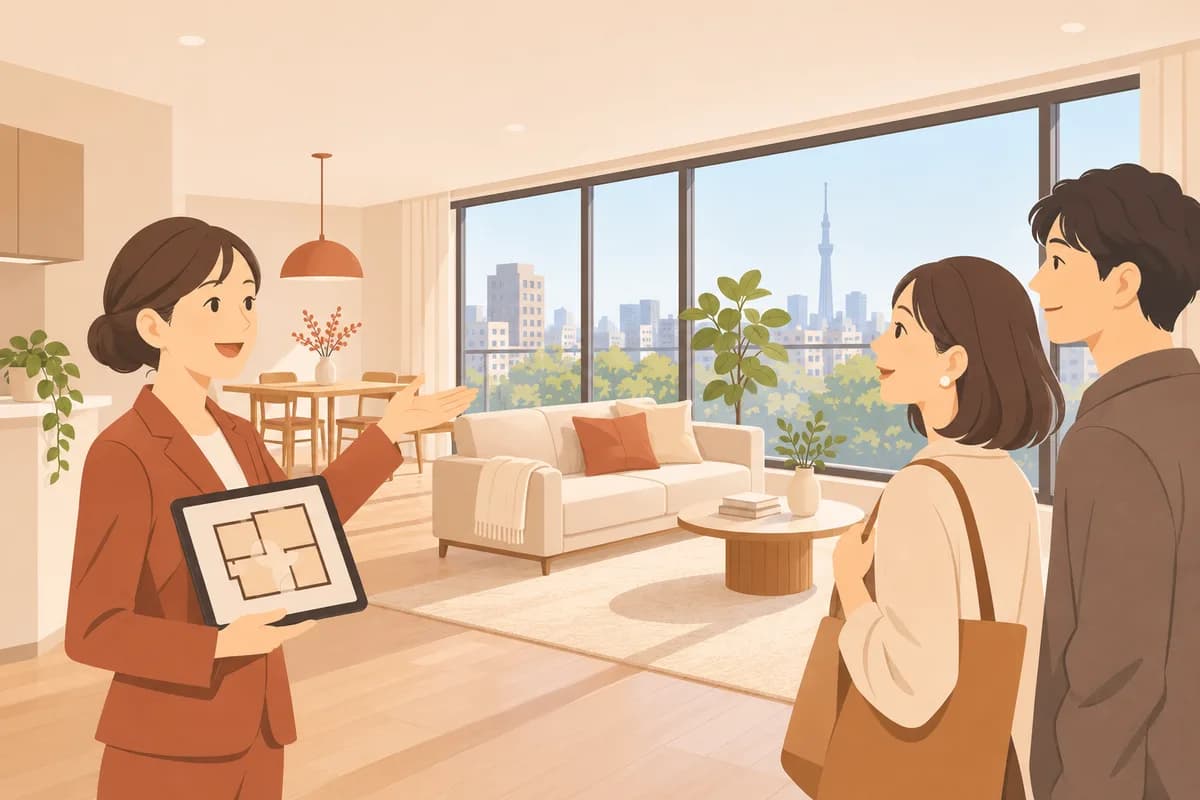
On a Friday afternoon, a Japanese family newly arrived in Vietnam asks you to find an apartment. The husband works all day, so the wife goes to view places with you, and she asks three questions right away: 日当たりはどうですか, 管理費は含まれていますか, 敷金は返ってきますか. You understand every word, but you are not sure what tone to use when answering so you stay polite and do not over-promise.
Many Japanese clients ask closely about each payment and speak indirectly when they disagree. They notice how you name each item, and mixing up a term like 敷金 or 管理費 will make them ask again; ask again too many times and trust drops. The hard part of this job is how you speak, rarely vocabulary.
This article is for sales staff and brokers in Vietnam working with Japanese clients renting or buying homes, and for Japanese learners who want to enter the field. In the middle are vocabulary tables step by step, from listings to handover, then five grammar points, three sample dialogues with translations, how to practice, and frequently asked questions.
- What Japanese clients ask when house hunting
- Vocabulary by workflow step
- Five grammar points you use all day
- Three sample dialogues
- How to practice for real estate work
- Frequently asked questions
- Where to start
What Japanese clients ask when house hunting
Many Japanese clients sales meet in Vietnam are 駐在員 (employees sent by their company on a fixed-term assignment) and some individual workers. They are used to Japan’s rental system, so they bring a few expectations and a few fixed questions. The table below lists what you will hear most often and what the client really wants to know.
| Client asks | Japanese | What the client wants to know |
|---|---|---|
| Does this unit get sun? | 日当たりはどうですか。 | Orientation, light, especially in the morning |
| Is the management fee included in the rent? | 管理費は家賃に含まれていますか。 | Total amount due each month |
| Is the deposit refunded? | 敷金は返ってきますか。 | Conditions for getting the deposit back when moving out |
| Is there parking? | 駐車場はありますか。 | Whether parking is in the rent or billed separately |
| How far is the Japanese school? | 日本人学校までどのくらいですか。 | Distance and the child’s daily commute |
| Will repairs be done if the AC breaks? | エアコンが壊れたら、誰が修理しますか。 | Who pays and who to contact |
Japan’s rental system also has 礼金, a payment usually not refunded, paid to the landlord when signing, and 原状回復, the obligation to return the unit to its original condition when leaving. Clients who lived in Japan will ask about both, even when the contract in Vietnam has no matching line item. The most honest answer is to state clearly which charges this contract includes, for example 「こちらの契約には礼金の項目はございません」, then point to the clause.
Another thing: clients often want someone who can speak Japanese at every step, from viewings to problems after move-in. If you can handle that, your value is right there. So the vocabulary tables below follow real work order, not alphabetical order.
Vocabulary by workflow step
The set of 42 words used in the game at the end of the article fits in these five tables, plus a few extras like 物件, 賃料, and 原状回復. Each table has kana readings because kanji in listings and contracts often have two or three readings. Example sentences use illustrative amounts, not market prices.
Listings, property types, and parties in the transaction
| Word | Reading | Meaning | Example sentence | Translation |
|---|---|---|---|---|
| 物件情報 | ぶっけんじょうほう | listing, unit information | こちらが今週の物件情報です。 | Here is this week’s unit information. |
| 不動産 | ふどうさん | real estate | 不動産のご購入をお考えですか。 | Are you considering buying real estate? |
| マンション | マンション | condominium apartment | 会社に近いマンションをご希望ですか。 | Would you like a condo near the company? |
| 一戸建て | いっこだて | detached house, townhouse | 庭付きの一戸建てもございます。 | We also have detached houses with a yard. |
| 仲介業者 | ちゅうかいぎょうしゃ | broker, agent | 私どもは仲介業者として、貸主様と借主様の間に入ります。 | We stand between the landlord and tenant as brokers. |
| 貸主 | かしぬし | landlord, lessor | 貸主様にご確認いたします。 | I will confirm with the landlord. |
| 借主 | かりぬし | tenant, lessee | 借主様は日本人のご家族です。 | The tenant is a Japanese family. |
| 買主 | かいぬし | buyer | 買主様は来週ベトナムにいらっしゃいます。 | The buyer will come to Vietnam next week. |
| 売主 | うりぬし | seller | 売主様はこの価格での売却を希望されています。 | The seller wants to sell at this price. |
In Japanese, people call the landlord 大家 or 家主 in casual talk; 貸主 is the contract term. With clients, use 貸主様 or オーナー様. オーナー appears a lot in listings and conversation, and it sounds lighter.
Viewings and amenities
| Word | Reading | Meaning | Example sentence | Translation |
|---|---|---|---|---|
| 内見 | ないけん | property viewing | 明日の午後に内見はいかがでしょうか。 | Would tomorrow afternoon work for a viewing? |
| 間取り | まどり | layout, floor plan | 間取りは2LDKです。 | The layout is 2LDK (two bedrooms plus living, dining, kitchen). |
| 専有面積 | せんゆうめんせき | exclusive floor area | 専有面積は85平方メートルです。 | Exclusive floor area is 85 square meters. |
| 寝室 | しんしつ | bedroom | 寝室は2つございます。 | There are two bedrooms. |
| 家具付き | かぐつき | furnished | こちらは家具付きのお部屋です。 | This unit comes furnished. |
| 共用施設 | きょうようしせつ | shared building facilities | 共用施設にはジムとプールがございます。 | Shared facilities include a gym and pool. |
| バルコニー | バルコニー | balcony | バルコニーから川が見えます。 | You can see the river from the balcony. |
| エレベーター | エレベーター | elevator | エレベーターは3基ございます。 | The building has three elevators. |
| エアコン | エアコン | air conditioner | すべての部屋にエアコンが付いています。 | Every room has air conditioning. |
| 駐車場 | ちゅうしゃじょう | parking | 駐車場は地下にあり、1台分は家賃に含まれています。 | Parking is underground; one space is included in the rent. |
| プール | プール | pool | プールは朝6時から夜10時までご利用いただけます。 | The pool is available from 6 a.m. to 10 p.m. |
| 立地 | りっち | location | 立地が良く、日本人学校までバスで10分です。 | Good location; ten minutes by bus to the Japanese school. |
How 2LDK and 3LDK appear on Japanese listings is what clients are used to seeing. L is living room, D is dining room, K is kitchen, and the number in front is bedrooms. When showing a unit in Vietnam, you can say 「日本の表記で言うと、2LDKです」 so they picture it immediately. Keep 日当たり (sun exposure) and 眺望 (view) in mind too; clients ask about them on many viewings.
Rent, deposit, and fees
| Word | Reading | Meaning | Example sentence | Translation |
|---|---|---|---|---|
| 家賃 | やちん | monthly rent | 家賃は月額2500万ドンです。 | Rent is 25 million dong per month. |
| 敷金 | しききん | security deposit | 敷金は家賃2か月分です。 | The deposit is two months’ rent. |
| 管理費 | かんりひ | management fee | 管理費は家賃に含まれておりません。 | The management fee is not included in the rent. |
| 光熱費 | こうねつひ | utilities (electricity, water, gas) | 光熱費は実費でお支払いいただきます。 | Utilities are paid at actual cost by the tenant. |
| 価格 | かかく | price | こちらの価格は交渉可能です。 | This price is negotiable. |
| 仲介手数料 | ちゅうかいてすうりょう | brokerage fee | 仲介手数料は成約時にいただきます。 | We collect the brokerage fee at contract signing. |
| 頭金 | あたまきん | down payment | 頭金はどのくらいをご予定でしょうか。 | How much down payment are you planning? |
| 住宅ローン | じゅうたくローン | home loan | 住宅ローンのご利用をご検討でしょうか。 | Are you considering a home loan? |
| 振込 | ふりこみ | bank transfer | お振込みでお願いできますでしょうか。 | Could you pay by bank transfer? |
| 賃料 | ちんりょう | rent (contract wording) | 賃料の支払日は毎月5日です。 | Rent is due on the 5th of each month. |
家賃 and 賃料 both mean rent, but 賃料 is what you see in contracts and listings, while 家賃 is what clients say in conversation. 光熱費 bundles electricity, water, and gas; bills in Vietnam are often split by type, so when quoting prices say clearly which items the tenant pays from their own bills. On 住宅ローン, foreigners’ loan eligibility depends on the bank and current rules, so only say 「銀行にご確認いただく必要があります」 and do not promise.
Contracts and negotiation
| Word | Reading | Meaning | Example sentence | Translation |
|---|---|---|---|---|
| 賃貸契約 | ちんたいけいやく | lease contract | 賃貸契約の期間は1年間です。 | The lease term is one year. |
| 売買契約 | ばいばいけいやく | sale contract | 売買契約の前に、内容をご説明いたします。 | Before the sale contract, I will explain the contents. |
| 購入申込 | こうにゅうもうしこみ | purchase application | 購入申込書にご記入をお願いいたします。 | Please fill in the purchase application form. |
| 交渉する | こうしょうする | negotiate | 家賃について貸主様と交渉してみます。 | I will try to negotiate the rent with the landlord. |
| 貸す | かす | rent out, lease | 貸主様はこのお部屋を長期で貸したいとのことです。 | The landlord wants to lease this unit long term. |
| 署名する | しょめいする | sign | こちらにご署名をお願いいたします。 | Please sign here. |
| 更新 | こうしん | renewal | 更新される場合は、1か月前までにご連絡ください。 | If you renew, please contact us one month ahead. |
| 解約 | かいやく | termination (of contract) | 途中で解約される場合は、事前のご連絡が必要です。 | If you terminate mid-term, advance notice is required. |
契約 is a heavy word. When the client is only inquiring, use お申し込み (application, reservation) for a lighter tone, and say 契約 only when both sides are about to sign. That holds in many industries, but in real estate the wrong word can sound like you committed on the landlord’s behalf.
Handover and after move-in
| Word | Reading | Meaning | Example sentence | Translation |
|---|---|---|---|---|
| 引き渡し | ひきわたし | handover | 引き渡しは来月1日の予定です。 | Handover is scheduled for the 1st next month. |
| 入居する | にゅうきょする | move in | 入居は鍵をお渡ししてからになります。 | Move-in is after you receive the keys. |
| 不具合 | ふぐあい | defect, fault | 不具合があれば、今日中にお知らせください。 | If anything is wrong, please tell us today. |
| 修理 | しゅうり | repair | 修理は貸主様の負担で行います。 | Repairs are at the landlord’s expense. |
| 鍵 | かぎ | key | 鍵は3本ございます。 | There are three keys. |
| 立ち会い | たちあい | being present for inspection | 引き渡しの際は、立ち会いをお願いします。 | Please be present for the handover inspection. |
| 原状回復 | げんじょうかいふく | restoration to original condition | 退去時の原状回復については、契約書の第10条をご覧ください。 | For restoration when moving out, see article 10 of the contract. |
For Japanese clients, handover is when they inspect most closely. They may photograph every corner, note scratches on the floor, and ask whether those marks were there before. Prepare a condition sheet both sides sign, and use 「入居前の状態」 (condition before move-in) when talking about existing damage.
Five grammar points you use all day
The client is a stranger, often older than you and paying for service, so you use keigo for most of the appointment. The five points below are the sentence patterns that repeat most. You do not need the whole keigo system at once; just use these patterns correctly.
1. Honorific for the client, humble for yourself
Basic pattern: client verbs use 尊敬語, e.g. ご覧になる (view), いらっしゃる (come, be present). Your verbs use 謙譲語, e.g. お + verb stem (ます dropped) + する, or ご + noun + する/いたす.
- お部屋をご覧になりますか。(Would you like to see the room?)
- こちらからご案内いたします。(I will guide you from this side.)
- 資料をお送りします。(I will send you the materials.)
A common mistake for learners from Vietnam is using honorific for yourself, e.g. 私が部屋をご覧になります. The correct line is 私が部屋をご案内します (I will show you the room). Another mistake is calling the client あなた, which sounds very rude. Use surname + 様, e.g. 田中様, or お客様.
2. 〜ていただけますか and 〜てもよろしいでしょうか
Both are used when asking the client to do something or asking permission. 〜ていただけますか is a request; 〜てもよろしいでしょうか is asking permission.
- こちらにご記入いただけますか。(Could you fill this in for me?)
- 少々お待ちいただけますか。(Could you wait a moment?)
- お部屋の写真を撮ってもよろしいでしょうか。(May I take photos of the room?)
Learners often use 〜てください with clients because beginner textbooks drill it. 〜てください is grammatically fine, but when the client is someone you serve it sounds like a mild order. Switch to 〜ていただけますか for things like signing, showing ID, waiting.
3. 〜となっております and 〜でございます when stating conditions
When describing the unit or contract, real estate staff often use 〜となっております (it is set as follows) instead of 〜です. This pattern sounds like you are reading given information, not giving a personal opinion.
- 家賃は管理費込みとなっております。(Rent includes the management fee.)
- 駐車場は別料金となっております。(Parking is charged separately.)
- こちらがお部屋の間取りでございます。(This is the room layout.)
If you end every sentence with です the client still understands, but the tone stays flat and a bit like a new hire. Do not overdo the opposite: 〜でございます for everything sounds theatrical. Use it for formal moments like handing documents or introducing yourself; use です for the rest.
4. Conditions with 〜場合は and 〜たら
Every contract has conditions, so 〜場合は (in the case that) shows up constantly. 〜たら is for something that has not happened yet and you want the client to contact you when it does.
- ペットを飼う場合は、貸主様の許可が必要です。(If you keep a pet, you need the landlord’s permission.)
- 契約を更新しない場合は、1か月前までにお知らせください。(If you do not renew, please notify us one month ahead.)
- 不具合を見つけたら、すぐにご連絡ください。(If you find a defect, contact us right away.)
A common mistake is using 〜と for requests, e.g. 来月になると連絡してください. 〜と does not work with requests or commands. The correct form is 来月になったら連絡してください. Drill this: conditional clause plus request afterward → 〜たら or 〜場合は.
5. Cushion words and soft refusals
Japanese refusals in business are rarely plain いいえ or できません. People add cushions like 恐れ入りますが, 申し訳ございませんが, あいにく, then use 〜かもしれません or 難しい to leave room. In price negotiation this is the pattern you use most.
- 恐れ入りますが、その金額は難しいかもしれません。(I am sorry; that amount may be difficult.)
- 申し訳ございませんが、貸主様に確認してからお返事いたします。(I am sorry; I will confirm with the landlord and reply.)
- あいにく、そのお部屋はすでに契約済みです。(Unfortunately, that unit is already under contract.)
For Vietnamese speakers, the most common mistake is answering 大丈夫です. In Japanese, 大丈夫です can mean yes or no, so clients often read you backwards. To agree, say 承知いたしました or かしこまりました; to refuse, use one of the three patterns above.
Three sample dialogues
The three dialogues below use the grammar patterns from above. Read them aloud, cover the right column, then translate back yourself. Amounts in the examples are illustrative.
Showing a client a property
| Speaker | Japanese | Translation |
|---|---|---|
| Sales | 田中様、本日はお越しいただき、ありがとうございます。担当のグエンです。 | Thank you for coming today, Ms. Tanaka. I am Nguyen, your contact. |
| Client | よろしくお願いします。家族4人で住む予定です。 | Nice to meet you. Our family of four will live here. |
| Sales | 承知いたしました。こちらが3階のお部屋です。専有面積は100平方メートルで、寝室は3つございます。 | Understood. This is the unit on the third floor. Exclusive area is 100 square meters, with three bedrooms. |
| Client | 日当たりはどうですか。 | How is the sun exposure? |
| Sales | 南向きですので、午前中からよく日が入ります。バルコニーからは公園も見えます。 | It faces south, so sunlight comes in well from the morning. You can also see the park from the balcony. |
| Client | エアコンは全部の部屋にありますか。 | Is there AC in every room? |
| Sales | はい、すべてのお部屋に付いております。家具も備え付けです。 | Yes, every room has it. Furniture is included too. |
| Client | 管理費はおいくらですか。 | How much is the management fee? |
| Sales | 管理費は月額300万ドンで、家賃とは別になっております。プールとジムは自由にお使いいただけます。 | The management fee is 3 million dong per month, separate from rent. You may use the pool and gym freely. |
| Client | 分かりました。少し考えてから連絡します。 | Understood. I will think a bit and get in touch. |
| Sales | かしこまりました。ご不明な点がございましたら、いつでもご連絡ください。 | Certainly. If anything is unclear, contact us anytime. |
Negotiating rent and deposit
| Speaker | Japanese | Translation |
|---|---|---|
| Client | 家賃をもう少し下げていただくことはできませんか。 | Could you lower the rent a little more? |
| Sales | 貸主様に相談してみます。ご契約期間はどのくらいをお考えですか。 | I will discuss with the landlord. How long are you thinking of leasing? |
| Client | 2年は住む予定です。 | We plan to stay two years. |
| Sales | 2年でしたら、交渉の余地があるかもしれません。確認して、明日までにお返事いたします。 | If it is two years, there may be room to negotiate. I will check and reply by tomorrow. |
| Client | 敷金は返ってきますか。 | Is the deposit refunded? |
| Sales | はい、退去時にお部屋の状態を確認したうえで、修理が必要な箇所の費用を差し引き、残りをお返しします。 | Yes. When you move out, after we check the room, we deduct repair costs where needed and return the rest. |
| Client | 契約書は日本語でもらえますか。 | Can I get the contract in Japanese? |
| Sales | 申し訳ございません、契約書自体は現地の言語のものになります。日本語の要約はご用意いたします。 | I am sorry; the contract itself is in the local language. We will prepare a Japanese summary. |
The sales rep’s last line is worth noting: you do not stop at 「日本語の契約書はありません」; you offer an alternative right away. That is the negotiation style to copy. Check any promise about contract format with your company’s legal team first.
Apartment handover
| Speaker | Japanese | Translation |
|---|---|---|
| Sales | 鍵は3本ございます。お確かめください。 | There are three keys. Please check. |
| Client | はい、3本あります。 | Yes, three. |
| Sales | 次に、お部屋の状態を一緒に確認いたしましょう。不具合がございましたら、この用紙にご記入いただけますか。 | Next let’s check the room together. If anything is wrong, could you note it on this form? |
| Client | キッチンの引き出しが1つ壊れています。 | One kitchen drawer is broken. |
| Sales | 承知いたしました。写真を撮って、貸主様に修理をお願いいたします。 | Understood. I will take photos and ask the landlord to repair it. |
| Client | いつごろ直りますか。 | About when will it be fixed? |
| Sales | 修理の者が今週中に伺えるよう手配いたします。 | I will arrange for a repair person to come this week. |
| Client | お願いします。 | Please do. |
| Sales | こちらにご署名いただけますか。これで引き渡しは完了です。 | Could you sign here? That completes the handover. |
How to practice for real estate work
Start by playing the real estate word set in Falling Stars or Pop It. Play a few rounds until you see kanji and can say the meaning, then return to the tables above and read each example sentence aloud.
Next step is listening. Pick one episode from the Japanese podcast, transcribe line by line, and compare to the original. Line-by-line transcription shows where you misheard, especially particles and endings like 〜ております, 〜いただけますか, things new learners’ ears skip. For a path, see courses, and use the vocabulary test to see where you stand.
Outside WELE: Japan Foundation’s free Irodori textbook teaches clean everyday Japanese and fits the foundation layer. For field vocabulary, the best move is reading real listings on Japanese sites like SUUMO or HOME'S, where 間取り, 専有面積, and 管理費 appear in every ad. Those site names are for you to find reading material; content and prices there are the Japan market, not Vietnam. When you want to test yourself, JLPT mock tests on WELE show where you stand.
If your work also touches contracts or running a company, see Japanese for legal work and contracts and Japanese for business owners. All other professions are at Japanese by profession, and this industry’s page is Japanese for real estate.
Frequently asked questions
What Japanese level do you need to sell real estate to Japanese clients?
There is no single bar; each company states different requirements in job posts, and requirements change. When you talk to clients directly, listening and speaking matter more than certificates. Read the job description where you apply carefully and ask the recruiter straight.
Do you have to use keigo with Japanese clients?
In client work you use です・ます from nearly the first sentence; full keigo depends on formality and the client’s age. Master the five patterns in the grammar section, especially 〜ていただけますか and 〜となっております. Higher keigo you can pick up gradually with Japanese clients and colleagues.
Can foreigners buy property in Vietnam?
Rules on foreign ownership change over time and by property type, so check current regulations before answering clients. You can say 「最新の規定を確認してからご案内いたします」 and have legal or in-house counsel confirm. Never answer from memory.
How do 敷金 and 礼金 differ?
敷金 is a security deposit, usually returned when the tenant leaves after deducting repair costs if any. 礼金 is paid to the landlord at signing and is usually not refunded. Contracts in Vietnam may not have the second item, so show the client what this contract actually includes.
Do you need kanji for real estate vocabulary?
Yes, but only recognition level. Listings and contracts are in kanji, so you need to read 賃貸, 敷金, 管理費, 契約. For speaking, kana is enough. Short high-frequency words like 家賃 and 鍵 stick fast.
Where to start
If you do only one thing today, play one round of the word set in Falling Stars, then pick five sentences from the tables above and say them aloud at your next client viewing.
