Japanese for Construction Engineers: Site Vocabulary, 報連相, and Conversation
On this page
- Three layers of Japanese in one day on site
- Vocabulary by job on site
- People and places
- Drawings and documents
- Reinforced concrete structure
- Machinery, scaffolding, and installation
- Safety
- Inspection, defects, and progress
- Five grammar points: reporting, asking favors, rules
- 1. 報連相: report early, inform, consult
- 2. 〜ていただけますか, 〜てください, 〜ようにしてください
- 3. 〜ておきます and 〜てあります: prepare in advance, state already done
- 4. 〜なければなりません, 〜ことになっています, 〜てはいけません
- 5. Numbers and counters
- Two dialogues: KY activity and progress meeting
- Progress report sentence set
- How to practice for technical workers
- Frequently asked questions
- What level of Japanese do engineers need in Japan?
- How much kanji do you need?
- Is reading Japanese drawings hard?
- What does ご安全に mean and when do you use it?
- How is working for a Japanese company in Vietnam different from working in Japan?
- Things to do before day one
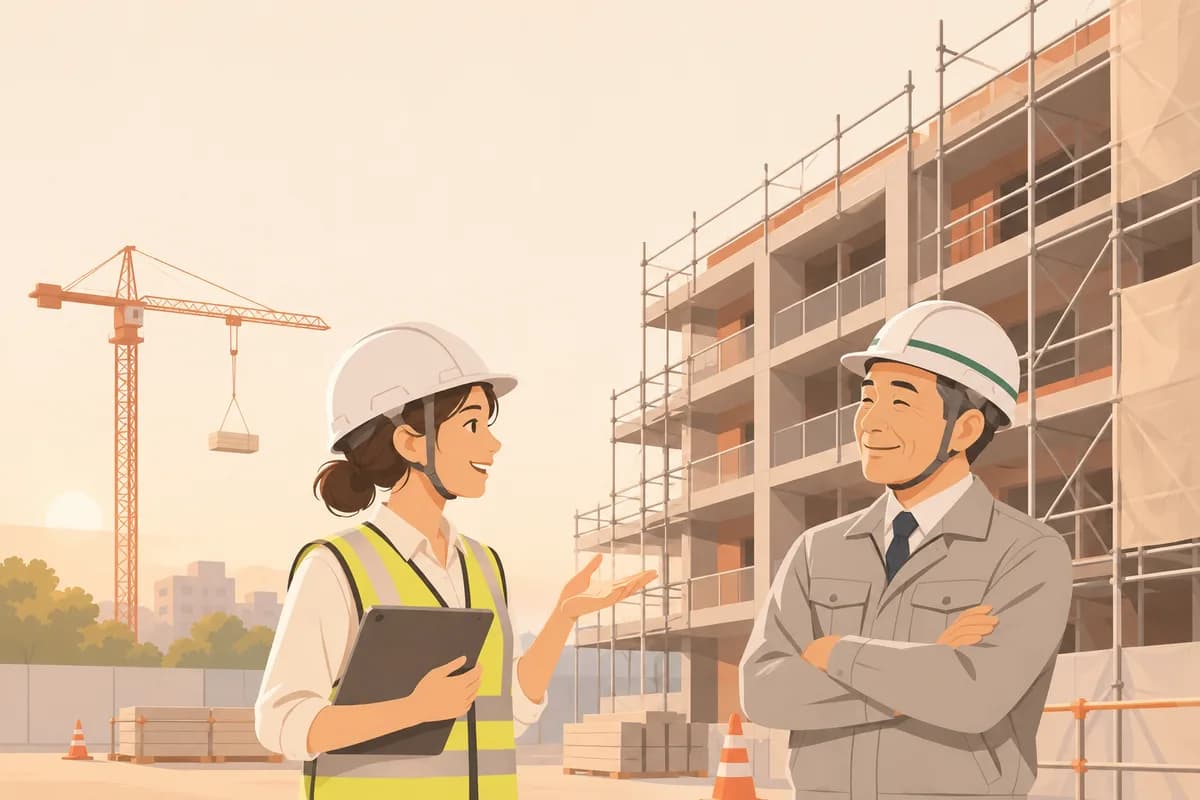
On your first morning at the apartment construction site, you stand in the circle listening to 朝礼. The supervisor runs through it in one go: today they erect 足場 on the outside of floor 5, 資材 come up by crane, who signals, who stands where. You know each word on its own, but they come fast, mixed with people’s names and machine names, and nobody stops to explain.
Then you turn to the drawings. Text on the 図面 is short and clipped, like 配筋は図面通り, 公差±2. With the 現場監督 you use です・ます; with the 職長 it’s more relaxed; when you write documents for the 発注者 you switch to written style. Three ways of speaking in one morning is what general Japanese textbooks almost never touch.
This article is for civil, mechanical, and engineering technicians about to work at a company or project with Japanese people, including those studying to go to Japan for 施工管理. You get vocabulary tables by job on site, five grammar points used all day, two dialogue passages, a set of progress-report sentences, then how to practice and a word set you can use in a game right away.
- Three layers of Japanese in one day on site
- Vocabulary by job on site
- Five grammar points: reporting, asking favors, rules
- Two dialogues: KY activity and progress meeting
- How to practice for technical workers
- Frequently asked questions
- Things to do before day one
Three layers of Japanese in one day on site
For the same task, people speak and write three different ways. Knowing which layer you’re in helps you pick the right level of politeness and the right level of brevity.
| Speak or write to whom | Typical style | Example |
|---|---|---|
| Supervisor, 発注者, client | です・ます, 〜ていただけますか, reports in the 報連相 mold | 確認をお願いできますか。 |
| 職長, workers, subcontractor crews | Short sentences, fast speech, often drop subject, lots of trade slang | そこ、まだ締まってないよ。 |
| 図面, 施工計画書, 日報 | Compound nouns, clipped sentences, symbols and numbers | 配筋検査 午後2時 / 公差±2mm |
The third layer is what many newcomers get left behind on. In site logs people write 打設完了 (pour finished) or 雨天のため作業中止 (work stopped due to rain), not full sentences. You don’t need to write it yet, but you have to read it, because the previous shift’s 日報 is what you take over at the start of the day.
The second layer is what you hear most. In noisy spots people give orders with very short words.
| What you hear | Meaning | Note |
|---|---|---|
| 止めて | stop | when a machine is running or something is being lifted |
| 上げて / 下げて | raise / lower | commands for crane and lift |
| 待って | hold on | can be said quickly as 待ち |
| オーライ | OK, keep going | signaler when a vehicle or load is backing in |
| ご安全に | work safely | familiar greeting at many sites, instead of おはよう or お疲れ様 |
When you hear these and don’t catch them in time, stop what you’re doing and ask again. On site, asking again is accepted more than guessing wrong.
Vocabulary by job on site
The six tables below are split by what you run into in a day. The reading column is there because kanji on drawings and in minutes are often read differently from what you’d guess. The 42-word game deck at the end of the article fits in these six tables.
People and places
| Word | Reading | Meaning | Example sentence | Translation |
|---|---|---|---|---|
| 現場 | げんば | construction site | 明日は朝7時に現場に集合です。 | Meet at the site tomorrow at 7 a.m. |
| 現場監督 | げんばかんとく | site superintendent | 現場監督の佐藤さんに図面を確認していただきました。 | Mr. Sato, the site superintendent, checked the drawings for me. |
| 職長 | しょくちょう | foreman | 職長の指示に従って作業を進めてください。 | Please proceed with work according to the foreman’s instructions. |
| 下請け | したうけ | subcontractor | 下請けの会社が今日から入ります。 | The subcontractor company starts today. |
| 発注者 | はっちゅうしゃ | client (owner) | 発注者の立会い検査は金曜日の予定です。 | Inspection with the client present is scheduled for Friday. |
現場監督 and 職長 are often confused. 現場監督 manages the whole site and works with the contracting party; 職長 leads a specific crew and is who you hear instructions from directly every day. At large companies the official title of the person in charge may be 現場代理人 or 所長, but on site people still call them 監督 in general.
Drawings and documents
| Word | Reading | Meaning | Example sentence | Translation |
|---|---|---|---|---|
| 図面 | ずめん | drawing | この図面は最新版ですか。 | Is this drawing the latest version? |
| 寸法 | すんぽう | dimensions | 寸法が図面と合っていません。 | The dimensions don’t match the drawing. |
| 公差 | こうさ | tolerance | 公差は±2mm以内です。 | Tolerance is within ±2 mm. |
| 仕様書 | しようしょ | specifications | 仕様書にはJIS規格の鋼材と書いてあります。 | The specs say JIS-standard steel. |
| 施工計画書 | せこうけいかくしょ | construction method statement | 施工計画書は明日までに提出してください。 | Please submit the construction method statement by tomorrow. |
| 工程表 | こうていひょう | schedule | 工程表では来週から配筋に入ります。 | According to the schedule, rebar work starts next week. |
| 承認する | しょうにんする | approve | 発注者が施工計画書を承認しました。 | The client approved the construction method statement. |
| 資材 | しざい | materials | 資材は午後1時に搬入されます。 | Materials will be delivered at 1 p.m. |
When reading a drawing set, recognize four view types first: 平面図 (plan), 立面図 (elevation), 断面図 (section), and 詳細図 (detail). The symbol φ is read ファイ, and units on building drawings are usually mm unless noted otherwise.
Reinforced concrete structure
| Word | Reading | Meaning | Example sentence | Translation |
|---|---|---|---|---|
| 基礎 | きそ | foundation | 基礎のコンクリートは来週打設します。 | Foundation concrete will be poured next week. |
| コンクリート | コンクリート | concrete | コンクリートの強度試験の結果が出ました。 | Concrete strength test results are in. |
| 鉄筋 | てっきん | rebar | 鉄筋の間隔をもう一度測ってください。 | Please measure rebar spacing again. |
| 型枠 | かたわく | formwork | 型枠は明日の朝、外します。 | Formwork comes off tomorrow morning. |
| 梁 | はり | beam | この梁にはどのくらいの荷重がかかりますか。 | How much load does this beam take? |
| 柱 | はしら | column | 柱の位置が2cmずれています。 | Column position is off by 2 cm. |
| スラブ | スラブ | slab | スラブの厚みは200mmです。 | Slab thickness is 200 mm. |
| 荷重 | かじゅう | load | 荷重が設計値を超えないようにしてください。 | Please keep load from exceeding the design value. |
打設 (だせつ) is the word you hear most around concrete pours, and 打つ in everyday speech uses that same meaning: コンクリートを打つ. The two share a root but sound different, so get used to both.
Machinery, scaffolding, and installation
| Word | Reading | Meaning | Example sentence | Translation |
|---|---|---|---|---|
| 足場 | あしば | scaffolding | 足場の点検は毎朝行います。 | Scaffolding inspection is done every morning. |
| クレーン | クレーン | crane | クレーンの下には入らないでください。 | Do not go under the crane. |
| 油圧ショベル | ゆあつショベル | excavator | 油圧ショベルが後ろに下がります、離れてください。 | Excavator backing up, please stand clear. |
| 溶接する | ようせつする | weld | ここは現場で溶接します。 | We weld this on site. |
| ボルト | ボルト | bolt | ボルトは規定のトルクで締めてください。 | Tighten bolts to the specified torque. |
| 配管 | はいかん | piping | 配管の図面を見せていただけますか。 | Could you show me the piping drawing? |
| ケーブル | ケーブル | cable | ケーブルを踏まないように気をつけてください。 | Please be careful not to step on cables. |
| 取り付ける | とりつける | install | 手すりを取り付けてから作業を始めます。 | We start work after installing the handrail. |
Off site, workers often say ユンボ for excavator, and ショベル in documents. All three mean the same machine, so don’t be thrown when you hear them mixed.
Safety
| Word | Reading | Meaning | Example sentence | Translation |
|---|---|---|---|---|
| ヘルメット | ヘルメット | hard hat | ヘルメットのあご紐を締めてください。 | Please tighten your hard hat chin strap. |
| フルハーネス | フルハーネス | full-body harness | 高所作業ではフルハーネスを使ってください。 | Use a full-body harness for work at height. |
| 危険 | きけん | hazard | 危険な場所には近づかないでください。 | Do not go near hazardous areas. |
| リスクアセスメント | リスクアセスメント | risk assessment | 作業前にリスクアセスメントを行います。 | We do a risk assessment before work. |
| 朝礼 | ちょうれい | morning safety meeting | 朝礼で今日の作業内容を確認します。 | At the morning meeting we confirm today’s work. |
| 事故 | じこ | accident | 事故が起きたらすぐに知らせてください。 | If an accident happens, tell someone immediately. |
| 墜落 | ついらく | fall from height | 墜落しないように、必ず親綱に掛けてください。 | To avoid falling, always hook onto the lifeline. |
Inspection, defects, and progress
| Word | Reading | Meaning | Example sentence | Translation |
|---|---|---|---|---|
| 検査 | けんさ | inspection | 配筋検査は午後2時からです。 | Rebar inspection starts at 2 p.m. |
| 不具合 | ふぐあい | defect | 不具合が見つかったので、写真を撮っておきます。 | Found a defect, so I’ll take photos. |
| ひび割れ | ひびわれ | crack | 壁にひび割れがあります。 | There is a crack in the wall. |
| 補修する | ほしゅうする | repair | ひび割れは今日中に補修します。 | Cracks will be repaired today. |
| 測る | はかる | measure | もう一度、長さを測り直します。 | I’ll measure the length again. |
| 遅延 | ちえん | delay | 雨のため、工程に2日の遅延が出ています。 | Rain has put the schedule two days behind. |
Five grammar points: reporting, asking favors, rules
1. 報連相: report early, inform, consult
This isn’t really grammar, but it decides what you say and when. 報告 is reporting results, 連絡 is information that needs passing on, 相談 is asking for input when you’re not sure. Common patterns: ご報告があります, 〜のですが、今よろしいでしょうか, 〜と思うのですが、いかがでしょうか.
- ご報告です。3階の鉄筋の間隔が図面と違っています。
- 1点ご相談があるのですが、今よろしいでしょうか。
- 雨で打設が遅れそうです。今のところ1日の遅れを見込んでいます。
A common mistake for Vietnamese engineers is finishing the fix first then reporting, because they don’t want to bother anyone. On Japanese sites people want to hear early, even when you don’t have a solution yet. An early line like 「まだ原因は分かりませんが、先にお知らせします」 is rated higher than a perfect report that comes late.
2. 〜ていただけますか, 〜てください, 〜ようにしてください
With supervisors and clients, ask for things with 〜ていただけますか. 〜てください is for instructions you give workers or peers. 〜ようにしてください is softer than a direct order and often used when reminding rules.
- すみません、最新の図面を見せていただけますか。
- ヘルメットのあご紐を締めてください。
- 足場の上に工具を置かないようにしてください。
Vietnamese speakers often say 「見せてください」 to superiors because it’s shorter. It’s not wrong, but it sounds like an order. When you didn’t catch something, don’t just say 「分かりません」, say 「申し訳ありません、もう一度お願いします」.
3. 〜ておきます and 〜てあります: prepare in advance, state already done
〜ておきます is something you do beforehand to prepare. 〜てあります is the result of someone having done something on purpose and it still being that way. These two patterns show up constantly at handover.
- 図面は印刷しておきます。
- 資材はもう搬入してあります。
- 親綱は東側の柱に張ってあります。
If you only use ました, the listener can’t tell whether it’s done and still in place. 張りました only says you tensioned it; 張ってあります says the line is there and usable.
4. 〜なければなりません, 〜ことになっています, 〜てはいけません
Three patterns for rules. 〜なければなりません is obligation, 〜てはいけません is prohibition, and 〜ことになっています explains that it’s the rule here or already decided, often when speaking to newcomers.
- 現場ではヘルメットを着用しなければなりません。
- ここでは作業前に朝礼に参加することになっています。
- 許可なく型枠を外してはいけません。
Learners often use 〜べきです to say what should be done, but 〜べき sounds like criticism. When explaining rules to new colleagues, 〜ことになっています is politer and fits the register better.
5. Numbers and counters
Sites are full of numbers: dimensions, quantities, floors, positions. Numbers are written in Arabic numerals, but counting and reading change with the counter.
| Counter | Used for | Example |
|---|---|---|
| 本 (ほん) | long objects: rebar, pipe | 鉄筋を20本搬入してください。 |
| 枚 (まい) | flat objects: form panels, boards | 型枠を30枚追加します。 |
| 台 (だい) | machinery, vehicles | 油圧ショベルが2台入ります。 |
| 箇所 (かしょ) | locations, spots | 3箇所にひび割れがあります。 |
| 階 (かい) | floor | 3階の東側です。 |
Watch sound changes: 3本 is さんぼん, 6本 is ろっぽん, 8本 is はっぽん, 3階 is さんがい. Learners often use 個 for everything, and that’s the easiest mistake to spot when you read a materials list.
Two dialogues: KY activity and progress meeting
The first situation happens right after 朝礼 on a 12-story apartment job. Foreman Yamamoto runs KY活動 (危険予知活動), the whole crew names hazards and countermeasures before work. Today the crew is assembling exterior scaffolding on floor 5.
| Role | Japanese | Translation |
|---|---|---|
| Yamamoto | では、KY活動をやります。今日は5階の外壁で足場の組立てです。どんな危険がありますか。 | Starting KY activity. Today we assemble scaffolding on the exterior of floor 5. What hazards are there? |
| Nguyen | 足場の上からの墜落と、工具の落下だと思います。 | I think falling from the scaffold and tools dropping. |
| Yamamoto | そうですね。対策は何ですか。 | Right. What are the countermeasures? |
| Nguyen | フルハーネスを親綱に掛けます。それから、工具は紐でつなぎます。 | Hook the full-body harness to the lifeline. Also tie tools with cord. |
| Yamamoto | いいですね。もう1つ、下の通路にも注意してください。上で作業している間は、下に人を入れないようにします。 | Good. One more thing, watch the path below. While work is going on above, we don’t let people below. |
| Nguyen | はい。立入禁止のコーンとバーを置いておきます。 | Yes. I’ll put out no-entry cones and bars. |
| Yamamoto | お願いします。じゃあ、ご安全に。 | Please do. Well then, work safely. |
| Nguyen | ご安全に。 | Work safely. |
The second situation is the weekly progress meeting with site representative Nakamura. Nguyen has to report a delay, this is the kind of conversation where 報連相 is measured by how you open.
| Role | Japanese | Translation |
|---|---|---|
| Nakamura | 工程を確認します。外壁足場の組立ては、予定より2日遅れていますね。 | I’ll confirm the schedule. Exterior scaffold assembly is two days behind plan. |
| Nguyen | はい。雨で3日間作業ができませんでした。ご報告が遅くなり、申し訳ありません。 | Yes. Rain stopped work for three days. Sorry the report is late. |
| Nakamura | 原因は雨だけですか。 | Is rain the only cause? |
| Nguyen | 資材の搬入も半日遅れました。対策として、来週は職長と相談して、作業員を2名増やす予定です。 | Material delivery was also half a day late. As a countermeasure, next week I plan to talk with the foreman and add two workers. |
| Nakamura | 増やす場合、入場前の安全教育をしておいてください。 | If you add people, give them safety training before they enter the site. |
| Nguyen | 承知しました。新しく入る方には、入場前に教育を行います。 | Understood. I’ll train new people before they enter. |
| Nakamura | では、遅れを取り戻す計画を明日までに出してください。 | Then submit a catch-up plan by tomorrow. |
| Nguyen | はい、明日の午前中に提出します。 | Yes, I’ll submit tomorrow morning. |
Progress report sentence set
| Japanese | Translation |
|---|---|
| ご報告があります。 | I have something to report. |
| 雨のため、打設が1日遅れそうです。 | Because of rain, the pour looks like it will slip one day. |
| 原因は、資材の到着が遅れたことです。 | The cause is late arrival of materials. |
| 対策として、午後に作業を前倒しします。 | As a countermeasure, we’ll pull afternoon work forward. |
| 念のため、写真を共有します。 | Just in case, I’ll share photos. |
| ご指示をいただけますか。 | Could I have your instructions? |
How to practice for technical workers
Start with the on-site word set in Falling Stars or Pop It. Play a few rounds until you see kanji and can say the meaning, then go back to the tables above and read each example sentence aloud. Reading aloud is the only way to get patterns like 〜ていただけますか into your mouth, they’re hard at the mouth, not at the eyes.
Next step is ear training. Pick an episode from Japanese podcasts, listen sentence by sentence and transcribe, then compare to the original. Transcribing sentence by sentence shows where you misheard, especially particles and sentence endings that new ears skip. If you want a path, see courses, and use the vocabulary test to see where you stand.
Outside WELE: Japan Foundation’s free Irodori textbooks teach everyday Japanese fairly cleanly and fit the foundation layer. That set doesn’t have construction trade vocabulary, so you still need the tables above for job words. Japan’s labor ministry also has occupational safety materials for foreign workers; some versions are in Vietnamese, but content is updated with law so use the current edition. When you want to test yourself, JLPT mock tests on WELE show where you stand.
Sites start early, so a fixed hour of study is hard to keep. Many people find a regular 15 minutes after dinner easier to sustain than one long session on the weekend. If your technical work is in a factory or software room, see Japanese for manufacturing plants and Japanese for IT people, or the full Japanese by profession hub and the engineering page.
Frequently asked questions
What level of Japanese do engineers need in Japan?
It depends on company and role, so there’s no single bar. Many civil and mechanical engineer postings list JLPT N2 or N3, but that’s still different from understanding fast spoken orders on site. Read the specific requirements where you apply, and practice listening alongside exam prep.
How much kanji do you need?
Enough to read drawings, signs, and minutes in your trade. Many job terms use short kanji that repeat constantly, like 梁, 柱, 鉄筋, 基礎, so learn from the word tables first then expand. You still need kana for speaking and listening.
Is reading Japanese drawings hard?
Hard the first week, then it eases. Drawings repeat the same word cluster: 平面図, 断面図, 詳細図, 寸法, 配筋, 〜以上, 〜以下, 同上 (same as above). Once that set is familiar, a new drawing isn’t unfamiliar characters anymore.
What does ご安全に mean and when do you use it?
It’s a greeting that wishes each other safe work, used instead of a normal hello at many sites and plants. You say it when you meet at the start of the day, when parting, and sometimes at the end of 朝礼. Use it once and you’ll sound like someone in the trade.
How is working for a Japanese company in Vietnam different from working in Japan?
In Vietnam you usually work with a few Japanese people and an interpreter, so daily listening and speaking is less but you have to write reports and logs in Japanese more accurately. In Japan you hear more, from more accents, and rarely have an interpreter beside you. Both places use the same trade vocabulary in the tables above.
Things to do before day one
Ask your company which KY活動 form they use, each site has its own sheet, then read that sheet along with the words in Falling Stars. The rest will come from the site itself.
