Japanese for Hotels and Homestays: Vocabulary, Keigo, Booking Calls, and Checkout
On this page
- A morning shift at the desk: how guests speak
- Four vocabulary tables along the guest’s journey
- From the entrance to the room key
- The room and items in the room
- Housekeeping and daytime services
- Checkout, payment, complaints, reviews
- Five keigo patterns you use all day
- 1. Guest actions use 尊敬語; your actions use 謙譲語
- 2. Lead-ins 恐れ入りますが and 〜でございます
- 3. お〜ください, ご〜ください and 〜ていただけますか
- 4. 〜いたします and 〜させていただきます
- 5. Nights, head count, time, and room numbers
- A reservation call and a checkout
- Taking a reservation call
- Checkout, receipt, and finding the umbrella
- Practice from the desk into real life
- Quick questions, short answers
- What are 領収書 and 宛名, and when do guests need them?
- What JLPT level do you need for front desk at a Japanese hotel?
- Do housekeeping staff need to learn keigo?
- How should a homestay host message Japanese guests?
- How do お客様 and お客さん differ?
- One thing for today
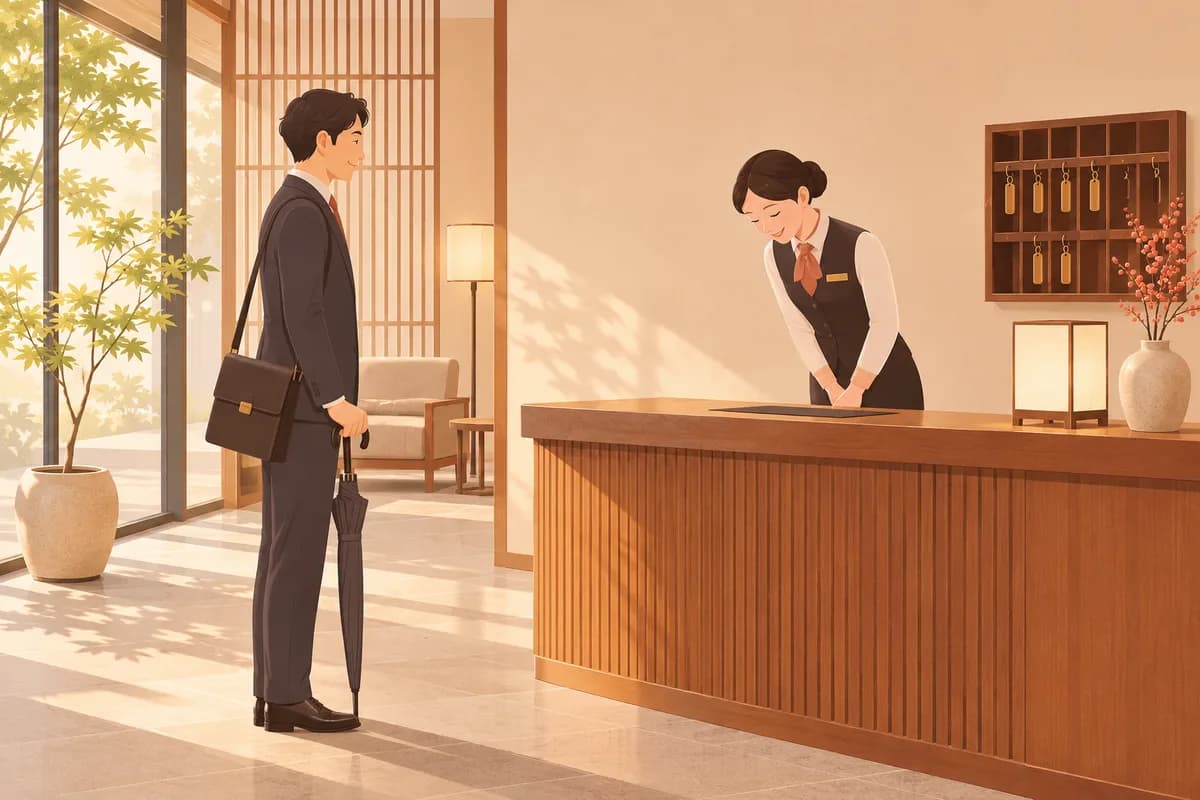
8:30 a.m. at a business hotel in Osaka, the checkout line stretches to the door. A man in a suit puts his key card on the counter and says quickly: 「チェックアウトお願いします。領収書、宛名は会社名でお願いします。あと、傘を部屋に忘れたかもしれません」. Three things in one sentence: checkout, a receipt with the company name, and an umbrella. You need to catch all three, reply in keigo, and still keep pace because the person behind is watching the clock.
Hotel work in Japan is hardest to hear in two places: the phone, where there is no face to read, and paperwork like 領収書 or 宿泊カード that guests expect you to handle without explanation. This article is for Vietnamese people working or preparing to work front desk or housekeeping at Japanese hotels, including through the 特定技能 program in 宿泊, and for receptionists in Vietnam hosting Japanese guests, or homestay hosts with Japanese guests.
The content follows a guest’s journey: vocabulary tables, five keigo patterns, two dialogues (a reservation call and a checkout), then how to practice. At the end there is a word set you can play with right away.
- A morning shift at the desk: how guests speak
- Four vocabulary tables along the guest’s journey
- Five keigo patterns you use all day
- A reservation call and a checkout
- Practice from the desk into real life
- Quick questions, short answers
- One thing for today
A morning shift at the desk: how guests speak
The two sides do not speak the same kind of Japanese. Guests usually use です・ます, often dropping the subject and even the verb. Staff use keigo for every sentence toward guests, and formal です・ます with each other when guests are nearby.
| Who speaks to whom | Typical style | Example |
|---|---|---|
| Guest to staff | です・ます, very short sentences | チェックアウトお願いします。 |
| Staff to guest | Keigo, お客様 or surname + 様 | 山本様、ご請求書をお持ちいたします。 |
| Staff to staff | Formal です・ます | 612号室のお客様がお待ちです。 |
| Messages, email | Polite written style, opening with thanks | ご予約ありがとうございます。 |
Japanese guests also often speak indirectly when something is not quite right, so 「ちょっと寒いですね」 can be a request to adjust the air conditioning. The safe move is to follow up with a concrete offer, like 「エアコンの温度を調節いたしましょうか」.
Another thing is paperwork. At the desk there is a 宿泊カード (guest registration card) for guests to fill in, 領収書 (receipt) when guests are on business trips, and sometimes guests say 「宛名は上様で」, meaning to put the name as 上様, a generic entry when the guest does not want to give a name. The tables below give full kana for each word.
Four vocabulary tables along the guest’s journey
From when the guest walks in, through the room and services, to payment. The game’s set of 40 words sits in these four tables, plus extra words like 宿泊カード, 領収書 and 号室. The meaning column matches what the game calls them; text in parentheses is extra notes.
From the entrance to the room key
| Word | Reading | Meaning | Sentence to guest | Translation |
|---|---|---|---|---|
| お客様 | おきゃくさま | guest staying at the property | ご予約のお客様でいらっしゃいますか。 | Are you the guest with a reservation? |
| フロント係 | フロントがかり | front desk staff | フロント係のグエンと申します。 | I am Nguyen, front desk staff. |
| フロント | フロント | front desk | フロントは24時間対応しております。 | The front desk is staffed 24 hours. |
| ホスト | ホスト | host (homestay) (person renting out the room) | ホストのリンです。ようこそお越しくださいました。 | I am Linh, your host. Welcome. |
| 民泊 | みんぱく | homestay | こちらは古い町家を使った民泊でございます。 | This homestay is in a traditional townhouse. |
| 予約 | よやく | reservation | ご予約を確認いたしますので、お名前をお願いします。 | I will confirm your reservation; may I have your name? |
| チェックイン | チェックイン | check-in | チェックインは午後3時からでございます。 | Check-in is from 3 p.m. |
| ルームキー | ルームキー | room key | こちらがルームキーでございます。612号室です。 | Here is your room key. Room 612. |
| パスポート | パスポート | passport | 恐れ入りますが、パスポートを拝見できますか。 | Excuse me, may I see your passport? |
| 荷物 | にもつ | luggage | お荷物はフロントでお預かりいたします。 | We can keep your luggage at the front desk. |
Call guests お客様, or surname + 様 once you know the name (山本様). 〜さん sounds like speaking to a peer. With foreign guests, the sentence asking for a パスポート needs a soft lead-in, because asking for documents is sensitive.
The room and items in the room
| Word | Reading | Meaning | Sentence to guest | Translation |
|---|---|---|---|---|
| シングルルーム | シングルルーム | single room | シングルルームを2泊でご予約でございますね。 | You booked a single room for two nights, correct? |
| ダブルルーム | ダブルルーム | double room | ダブルルームは8階でございます。 | The double room is on the 8th floor. |
| スイートルーム | スイートルーム | suite | スイートルームは最上階にございます。 | The suite is on the top floor. |
| エキストラベッド | エキストラベッド | extra bed | エキストラベッドをお入れしましょうか。 | Shall I set up an extra bed? |
| タオル | タオル | towel | タオルをもう1枚お持ちいたします。 | I will bring one more towel. |
| シーツ | シーツ | bed sheet | シーツをお取り替えいたします。 | I will change the sheets. |
| 枕 | まくら | pillow | 枕は2種類ご用意しております。 | We have two types of pillow. |
| 毛布 | もうふ | blanket | 毛布をもう1枚お持ちしましょうか。 | Shall I bring one more blanket? |
| エアコン | エアコン | air conditioner | エアコンの温度は、こちらのリモコンで変えられます。 | You can change the AC temperature with this remote. |
| ミニバー | ミニバー | minibar | ミニバーのお飲み物は有料でございます。 | Minibar drinks are charged. |
| 金庫 | きんこ | safe | 貴重品はお部屋の金庫をご利用ください。 | Please use the in-room safe for valuables. |
| WiFiパスワード | WiFiパスワード | Wi-Fi password | WiFiパスワードはこのカードに書いてございます。 | The Wi-Fi password is on this card. |
Katakana takes up nearly half the table, because item names are borrowed from English. What you need to drill is long vowels and rhythm: シーツ is しーつ with a long vowel, エアコン is えあこん. Getting long and short vowels wrong can turn into a different word, so say each word out loud.
Housekeeping and daytime services
| Word | Reading | Meaning | Sentence to guest | Translation |
|---|---|---|---|---|
| 客室係 | きゃくしつがかり | housekeeping staff | 客室係がタオルをお持ちいたします。 | Housekeeping will bring towels. |
| 清掃する | せいそうする | clean the room | お部屋の清掃は何時ごろがよろしいでしょうか。 | What time would suit you for room cleaning? |
| 起こさないでください | おこさないでください | do not disturb (door sign) | ドアに「起こさないでください」の札がある場合は、清掃に入りません。 | If this sign is on the door, we will not enter to clean. |
| ランドリーサービス | ランドリーサービス | laundry service | ランドリーサービスは、明日の夕方にお部屋へお届けします。 | Laundry will be delivered to your room tomorrow evening. |
| モーニングコール | モーニングコール | wake-up call | モーニングコールは何時にいたしましょうか。 | What time shall we call you? |
| 空港送迎 | くうこうそうげい | airport transfer | 空港送迎は前日までにご予約ください。 | Please book airport transfer by the day before. |
| 朝食 | ちょうしょく | breakfast | 朝食は2階のレストランで、6時30分から9時30分までです。 | Breakfast is in the restaurant on the 2nd floor, 6:30 to 9:30. |
| 忘れ物 | わすれもの | lost item | お部屋に忘れ物がございましたので、フロントでお預かりしております。 | Something was left in your room; we are holding it at the front desk. |
In housekeeping, the important sentence is the time question. 「お部屋の清掃は何時ごろがよろしいでしょうか」 lets the guest choose, and if they are already out before you knock, nobody is bothered. Before entering, you knock, say 「ハウスキーピングです」, wait a moment, then open.
Checkout, payment, complaints, reviews
| Word | Reading | Meaning | Sentence to guest | Translation |
|---|---|---|---|---|
| チェックアウト | チェックアウト | checkout | チェックアウトは午前10時までにお願いいたします。 | Please check out by 10 a.m. |
| レイトチェックアウト | レイトチェックアウト | late checkout | レイトチェックアウトは、追加料金がかかります。 | Late checkout costs extra. |
| 請求書 | せいきゅうしょ | bill | ご請求書をお持ちいたします。 | I will bring your bill. |
| デポジット | デポジット | deposit | デポジットは、チェックアウトの際にお返しいたします。 | The deposit is refunded at checkout. |
| チップ | チップ | tip | チップは結構でございます。 | Tips are not necessary. |
| キャンセルする | キャンセルする | cancel a booking | ご予約をキャンセルされる場合は、前日までにご連絡ください。 | If you cancel, please contact us by the day before. |
| 満室 | まんしつ | fully booked | 申し訳ございません、その日は満室でございます。 | We are sorry, we are full that day. |
| 宿泊する | しゅくはくする | stay overnight | 当ホテルに宿泊されるお客様は、大浴場を無料でご利用いただけます。 | Guests staying at this hotel may use the public bath free of charge. |
| クレーム | クレーム | complaint | お客様からのクレームは、担当の者が最後までお伺いいたします。 | A staff member in charge will hear your complaint through to the end. |
| 口コミ | くちこみ | guest review | 口コミに「スタッフが親切でした」とお書きいただき、ありがとうございます。 | Thank you for writing in your review that the staff were kind. |
Tips are uncommon at Japanese hotels, so you may meet guests who refuse change back, or foreign guests who add money and need a gentle refusal like the line in the table. 口コミ is worth remembering if you run a homestay because guests often read reviews on booking sites carefully before choosing.
Five keigo patterns you use all day
1. Guest actions use 尊敬語; your actions use 謙譲語
When talking about what the guest does, use respectful verbs like いらっしゃる (come, be), ご覧になる (look), お休みになる (rest). When talking about what you do for the guest, use humble verbs like 伺う (ask), 申す (say), お持ちする (carry), ご案内する (guide).
- お名前をお伺いしてもよろしいでしょうか。
- お客様のお荷物をお持ちいたします。
- 朝食は、2階のレストランでご覧いただけます。
A common mistake for Vietnamese speakers is using keigo for yourself, like 「フロントにいらっしゃいます」 to say you are at the desk, or calling the guest あなた. The guest is お客様; you are 私 or your name with 〜と申します.
2. Lead-ins 恐れ入りますが and 〜でございます
Before a request or bad news, Japanese add a lead-in phrase. 恐れ入りますが and 申し訳ございませんが go at the start of the sentence; 失礼ですが fits private questions. At the end of the sentence, でございます replaces です when presenting something to the guest.
- 恐れ入りますが、こちらにご記入をお願いいたします。
- 申し訳ございませんが、その日は満室でございます。
- こちらがお部屋の鍵でございます。
Two common front-desk mistakes that Japanese call バイト敬語: 「こちら、鍵になります」 and 「よろしかったでしょうか」 for a question about the present. At a hotel, the standard lines are 「鍵でございます」 and 「よろしいでしょうか」.
3. お〜ください, ご〜ください and 〜ていただけますか
When instructing guests, use お + native Japanese verb stem (待つ becomes お待ちください) or ご + Sino-Japanese word (記入 becomes ご記入ください). For a slightly bothersome ask, use 〜ていただけますか, one step softer than ください.
- こちらにご記入ください。
- 少々お待ちください。
- こちらにお名前をお書きいただけますか。
Learners often put お on everything, like 「お確認ください」 instead of 「ご確認ください」. The rule has exceptions, so for new words listen to coworkers and copy the whole phrase.
4. 〜いたします and 〜させていただきます
〜いたします is the humble form of します, for things you do for the guest: 確認いたします, お預かりいたします. 〜させていただきます is stronger, for when you need the guest’s consent or the action is within their space.
- 確認いたしますので、少々お待ちください。
- 先にお部屋へご案内させていただきます。
- お預かりした傘は、フロントで保管いたします。
A common mistake is 〜させていただきます in every sentence, which sounds stiff and repetitive. For most front-desk situations, 〜いたします is enough.
5. Nights, head count, time, and room numbers
Nights follow rendaku rules: 1泊 いっぱく, 2泊 にはく, 3泊 さんぱく, 4泊 よんはく, 6泊 ろっぱく, 8泊 はっぱく. People: 1名様 いちめいさま, 2名様 にめいさま, or お1人様 おひとりさま, お2人様 おふたりさま. Room numbers are read in chunks then 号室, e.g. 612号室 ろくひゃくじゅうにごうしつ.
- チェックインは午後3時から、チェックアウトは午前10時までです。
- 2泊3日で、2名様のご予約ですね。
- 612号室でございます。
Vietnamese speakers often read 4 as し in 4泊 or 4名様. Learn the whole chunk: よんはく, よんめいさま. For time, 4時 is よじ, not しじ.
A reservation call and a checkout
Taking a reservation call
On the phone you have no face, so each sentence needs to be clear and broken in the right places. Notice staff repeat the key facts to confirm: date, nights, room type.
| Role | Japanese | Translation |
|---|---|---|
| Reception | お電話ありがとうございます。ホテルさくら、フロントのグエンでございます。 | Thank you for calling. Hotel Sakura, front desk, Nguyen speaking. |
| Guest | 来週の火曜日から2泊で、シングルルームを予約したいのですが、空いていますか。 | I would like to book a single room for two nights from next Tuesday; do you have availability? |
| Reception | ありがとうございます。少々お待ちいただけますか。お待たせいたしました。火曜日から2泊でございますね。禁煙のお部屋と喫煙のお部屋がございますが、いかがなさいますか。 | Thank you. May I put you on hold briefly? Sorry for the wait. Two nights from Tuesday, correct? We have non-smoking and smoking rooms; which would you prefer? |
| Guest | 禁煙でお願いします。朝食は付いていますか。 | Non-smoking, please. Is breakfast included? |
| Reception | 朝食付きのプランもございます。ご案内いたしましょうか。 | We also have plans with breakfast. Shall I explain them? |
| Guest | お願いします。あと、チェックインは夜の9時ごろになりそうです。 | Please. Also, I will probably check in around 9 p.m. |
| Reception | かしこまりました。フロントは24時間対応しておりますので、ご安心ください。お名前とお電話番号をお願いいたします。 | Certainly. The front desk is open 24 hours, so please rest assured. May I have your name and phone number? |
| Guest | 山本です。電話番号は090-1234-5678です。 | Yamamoto. My number is 090-1234-5678. |
| Reception | 山本様、火曜日から2泊で、禁煙のシングルルームを朝食付きでお取りいたしました。ご来店をお待ちしております。 | Mr./Ms. Yamamoto, I have booked a non-smoking single with breakfast for two nights from Tuesday. We look forward to your visit. |
Checkout, receipt, and finding the umbrella
Three things at once, and staff handle them one by one: payment, receipt, forgotten item. Notice how they ask 宛名 before writing.
| Role | Japanese | Translation |
|---|---|---|
| Guest | チェックアウトお願いします。612号室です。 | Checkout, please. Room 612. |
| Reception | ありがとうございます。612号室の山本様ですね。ご請求書をお持ちいたします。お支払いは、現金とカードのどちらになさいますか。 | Thank you. Room 612, Mr./Ms. Yamamoto, correct? I will bring your bill. Will you pay cash or card? |
| Guest | カードで。それと、領収書をお願いします。宛名は会社名で。 | Card. And a receipt, please. Company name for the addressee. |
| Reception | かしこまりました。宛名はいかがいたしましょうか。 | Certainly. What name shall I put on the receipt? |
| Guest | 株式会社青山商事でお願いします。 | Aoyama Shoji Co., Ltd., please. |
| Reception | 株式会社青山商事様ですね。こちらが領収書でございます。ご確認をお願いいたします。 | Aoyama Shoji Co., Ltd., correct? Here is your receipt. Please check it. |
| Guest | ありがとう。あ、傘を部屋に忘れたかもしれません。 | Thank you. Oh, I may have left my umbrella in the room. |
| Reception | 確認いたしますので、少々お待ちいただけますか。こちらのお傘でよろしいでしょうか。 | I will check; may I ask you to wait a moment? Is this your umbrella? |
| Guest | それです。助かりました。 | That’s it. You saved me. |
| Reception | お忘れ物が見つかってよかったです。またのお越しをお待ちしております。 | Glad we found it. We hope to see you again. |
Practice from the desk into real life
Play the hotel word set in Falling Stars or Pop It until you see katakana and know the meaning. Then go back to the tables and read the example sentences aloud.
The phone deserves separate practice. Read the reservation call above out loud, record yourself, and listen back for swallowed endings on 〜でございます or 〜いたします. Then pick one episode from Japanese podcasts, copy each line and compare to the original, because beginner ears often drop particles and sentence endings. If you want a path, see courses, and use the vocabulary test to see where you stand.
Beyond WELE, Japan Foundation’s free Irodori textbook teaches clean everyday Japanese and works well as a base. 宿泊 is among the sectors in 特定技能, and each program and each hotel sets its own Japanese requirements, which can change over time, so read the current conditions for wherever you apply. When you want to test yourself, JLPT mock tests on WELE show where you stand. If you also work in restaurants or tour guiding, see Japanese for restaurants and cafés and Japanese for tour guides, or Japanese by profession and the hotel page.
Quick questions, short answers
What are 領収書 and 宛名, and when do guests need them?
領収書 is a receipt showing the amount paid, and 宛名 is the name written on it. Guests on business trips often need it to settle with their company, so you will often ask 「宛名はいかがいたしましょうか」. If the guest says 上様, write it exactly that way.
What JLPT level do you need for front desk at a Japanese hotel?
There is no single number because each hotel and each program sets its own level. Front desk listens and speaks the most, so requirements are usually higher than housekeeping. Ask the employer directly what conditions apply now.
Do housekeeping staff need to learn keigo?
Yes, but less than front desk. You need lines for meeting guests in the hallway and at the door: 失礼いたします, 少々お待ちください, ご不便をおかけします. Long keigo used at the desk can come later.
How should a homestay host message Japanese guests?
Send one short message before arrival day: thanks, check-in time, how to find the house, and a line that you are available. Example: 「ご予約ありがとうございます。チェックインは午後3時以降です。道がわかりにくい場合は、いつでもご連絡ください」. Use polite です・ます; no need to write overly fancy Japanese.
How do お客様 and お客さん differ?
お客様 is for speaking directly to guests or about guests at work. お客さん is more casual and usually only in everyday speech. At the desk, use お客様.
One thing for today
Pick three staff lines from the reservation call, read them aloud until you do not stumble, then play one round of the word set in Falling Stars.
